
NMPA – automatic ringfencing of cash transfers
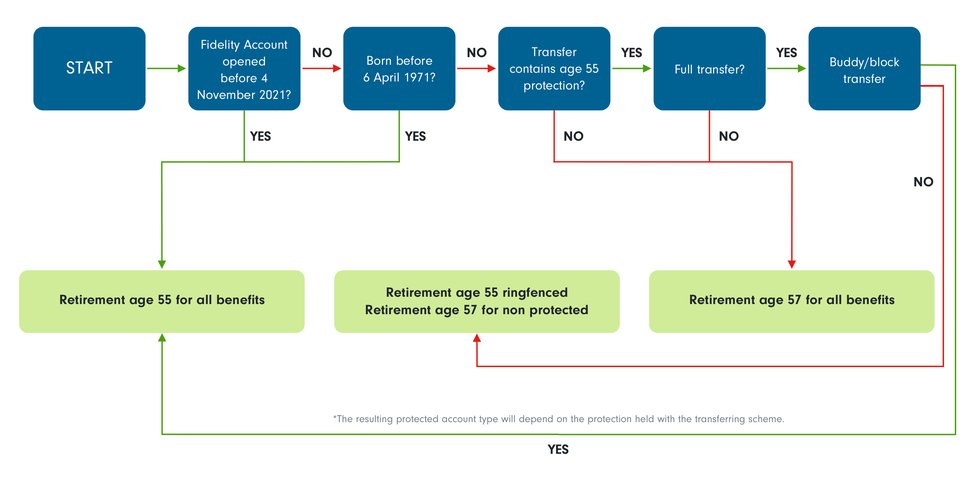
Ahead of the NMPA increase to 57 in April 2028, protected pension benefits from cash transfers will automatically be ringfenced so that clients can still access their benefits from age 55.
The change to the Normal Minimum Pension Age (NMPA)
As you will be aware, the NMPA is the earliest age at which most people can access their pension benefits without incurring an unauthorised payments tax charge. Following government legislation, the NMPA is increasing from 55 to 57 on 6 April 2028. This applies to most pension savers, although some pension plans have a Protected Pension Age (PPA) of 55. These plans will allow access to pension benefits from age 55 after the change takes effect.
The Protected Pension Age for the Fidelity Pension
If a client opened a Fidelity Pension or applied to transfer their pension to us before 4 November 2021, they will benefit from a Protected Pension Age of 55. In addition to any contributions or transfers made before this date, the protection also applies to any future contributions made to that pension. This means these clients continue to be able to access their Fidelity pension benefits from age 55, even after the increase to the NMPA comes into effect in April 2028.
Below we illustrate how your clients could be affected by the changes in the rules.
What’s changing?
If your client opened a pension with us on or after 4 November 2021 - they won't benefit from a Protected Pension Age and the minimum age that they can access their pension will rise to 57 on 6 April 2028. If your client will turn 57 before the age increase, they will not be impacted by this change. From October 2026, where we have been made aware by the transferring provider that a cash transfer includes protected pension benefits, we will automatically ringfence those benefits on receipt. No action is required from you.
Where required, we will create two separate pension accounts for the client:
- Minimum Retirement Age 55 – for protected benefits
- Minimum Retirement Age 57 – for non protected benefits.
This change applies to cash transfers only. Re-registration (in specie) transfers and any transfers for immediate drawdown are not included at this stage.
All future contributions and lump sums will continue to be paid into the age 57 account.
As a result of this change, where applicable, you and your client will see the following when viewing accounts online and on documentation:
- Clear retirement age (55 / 57) labels on client pension accounts
- In some cases, two pension accounts instead of one.
The overall value of your client’s pension will remain unchanged, and no additional charges will apply.
What happens next?
Currently, ringfencing will only apply to new cash transfers from October 2026. A review of certain transfers made between 4 November 2021 and October 2026 will follow, and we will contact you before any action is taken.
Below you will find a list of common questions we have been asked, along with the answers. In addition for more information on how to continue to administer your clients’ accounts and future transfers, please visit you ‘Help & Support’ area.
FAQ’s
Yes. Transfers between age 55 accounts are allowed, and transfers between age 57 accounts are allowed. Transfers between age 55 and 57 accounts are not allowed while the separation matters due to regulatory requirements to be able to identify protected and unprotected benefits.
Not all pension benefits will have the same minimum retirement age. Ringfencing creates clear guardrails, so protected and unprotected benefits are accessed at the correct time.
Confirmation must come from the ceding provider. If the protection information arrives late then the transfer may initially sit in the age 57 account until it can be reviewed and corrected once confirmation is available.
Yes. To retain protected pension age, the transfer must be full rather than partial.
If protected benefits are submitted against an age 57 account, Fidelity must create a separate age 55 account that mirrors the submitted model, fee and other account instructions. If you already have an appropriate transfer age 55 account and want to avoid another one, the protected transfer should be submitted to that account.
The account retirement age will be visible on the client account. New contributions will go to the age 57 account where applicable.
If protected funds have been consolidated into one account before the review, the calculation may create one related account. However, this may conflict with your original investment strategy and could create additional administration.
The new account is expected to mirror the original account’s model, fees, DFM fees and income treatment.
No. If a client has protection, Fidelity must preserve it; there is not currently an opt-out route.
Existing drawdown funds can continue to be accessed. However, any income dependent on new regular crystallisation or PCLS-funded phased crystallisation may need to stop until age 57. Advisers will need to identify and proactively manage affected clients.
These changes stem from complex regulatory requirements linked to the increase in the Normal Minimum Pension Age (NMPA) in 2028. Pension providers across the industry are implementing these changes and, while the required regulatory outcome is the same, there is no single industry-standard model for how they should be delivered.
Different providers are therefore adopting different operational approaches based on their own systems, products, and customer needs. Regardless of the operational approach taken, all providers must ensure that benefits with different minimum retirement ages are clearly identified and managed appropriately. The key objective is to protect customers' entitlements and ensure the correct retirement age is applied to the relevant benefits.
Fidelity's approach has been designed to support the accurate administration of protected and non-protected benefits and to help deliver the changes as smoothly as possible for our customers and advisers. This has required us to take a different approach operationally in how we deliver the changes for our Personal Investing and advised clients (who will see the benefits as separate accounts) and our Workplace Investing members (who will see the benefits as separate ‘pots’ within the same/original account).

© FIL Limited 2026